NenuFaR: Study of Fast Ripples as a potential biomarker for epileptic zone
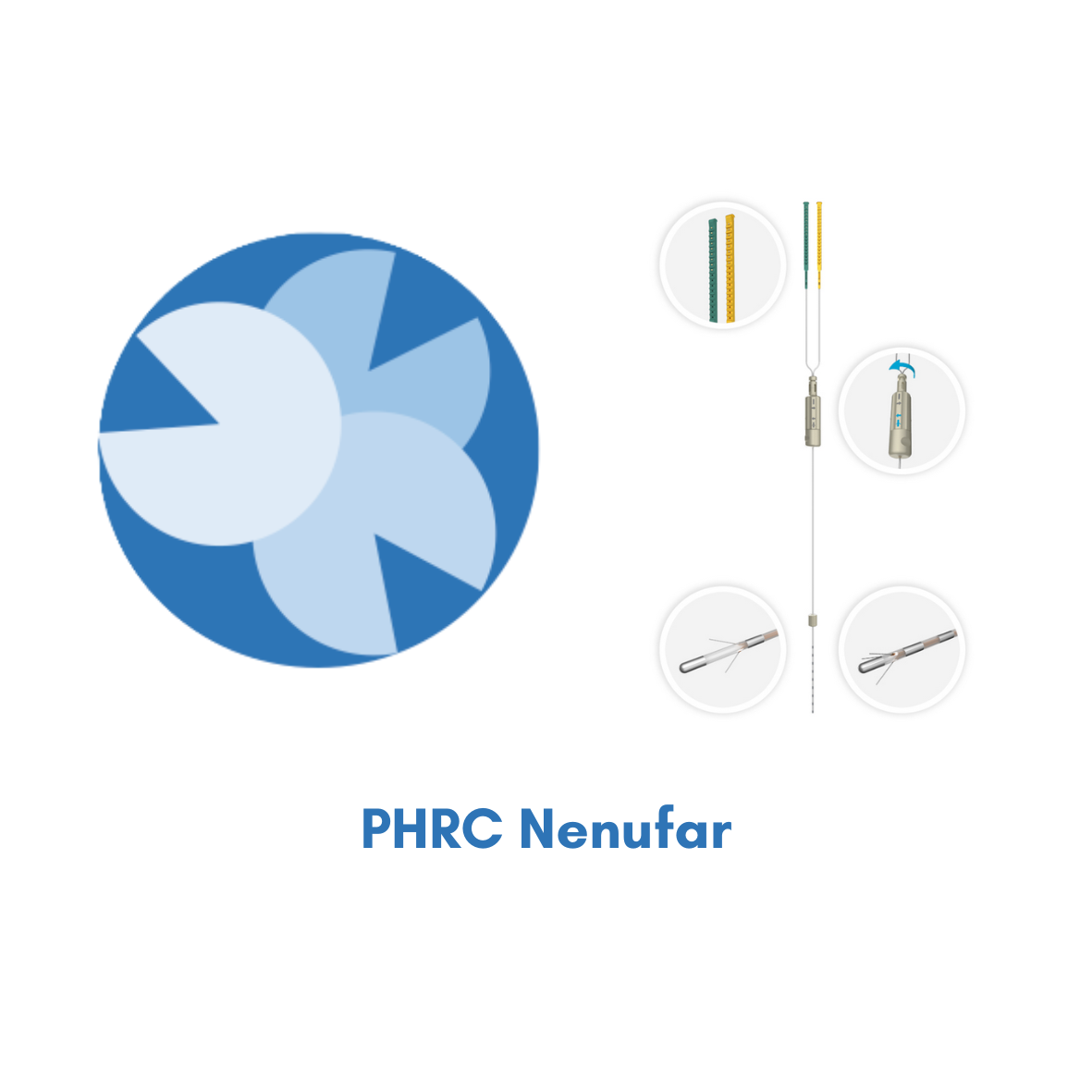
Nenufar, and its predecessor Epifar, contributed to the development of an innovative medical device: a hybrid depth electrode (DIXI medical) that enables multi-scale investigation of human brain activity. This electrode combines macrocontacts and microscale tetrodes, allowing for the simultaneous recording of local field potentials (LFPs), multiunit activity and single-neuron activity. These electrodes are implanted in both cortical regions (such as the medial temporal lobe, insula, and cingulate cortex). This design enables the characterisation of both local microdynamics and long-range interactions, providing a unique window into brain function across spatial and temporal scales — from the activity of individual neurons to the emergence of large-scale oscillatory patterns.
Fast Ripples (FRs, high frequency oscillations, 200-600 Hz) and epileptic spikes (SPKs) are two major candidate biomarkers epileptogenic zone (EZ) during the interictal period in patients with epilepsy. The multicentric study NenuFaR focuses on better characterising FRs on a macro-micro scale. FRs are detected and labelled using the Halyzia.
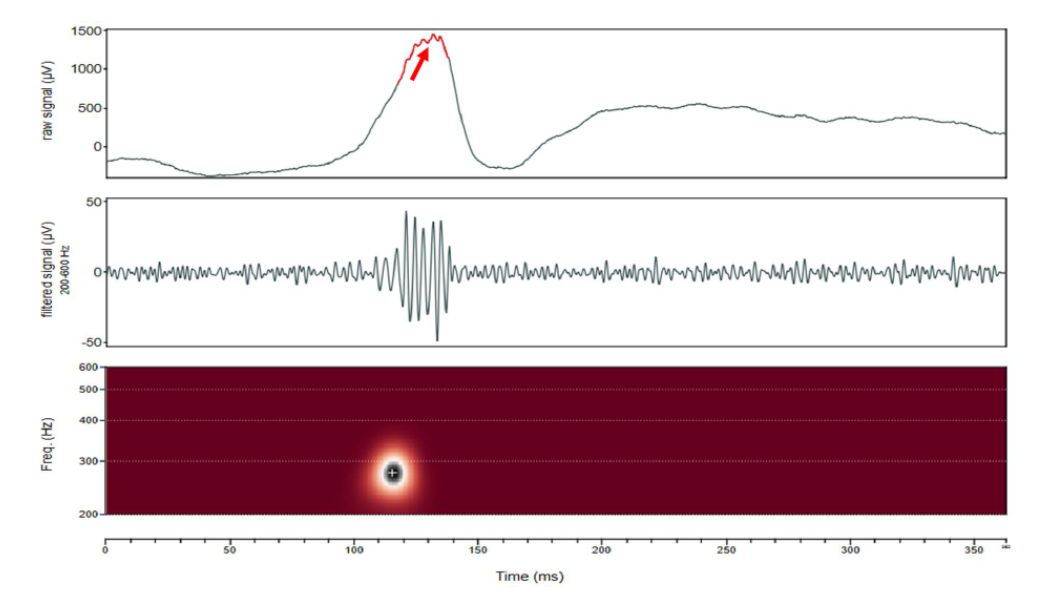
Example of a Fast Ripple at the top of an interictal epileptic discharge. Visualisation done with the Halyzia software.
PhD: Benoit Marcy
RA: Marina Inyutina, Célia Michaud
PIs: Luc Valton, Emmanuel Barbeau
Fundings:
PHRC NenuFaR: Contribution of fast-ripples to the improvement of the neurosurgical management of drug-refractory epilepsy