Memstim: Exploration of experiential phenomena
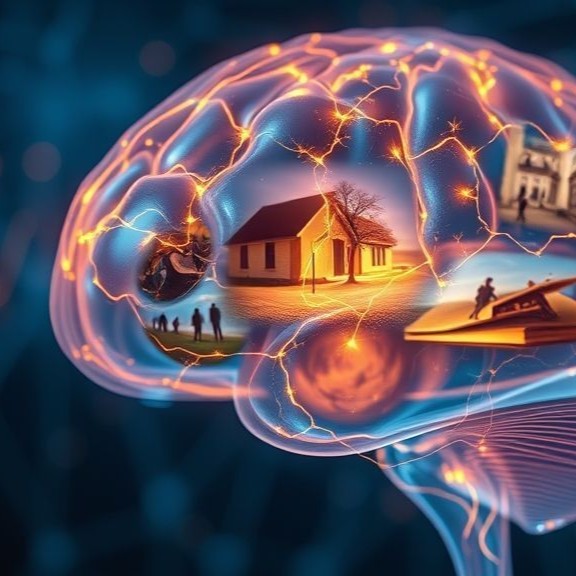
iEEG has played a paradoxical role in neuroscience: while it has contributed to the creation and reinforcement of certain neuromyths, it also serves as a powerful tool for validating neuromemes and challenging misconceptions. In this context, one driving force and source of inspiration today, stemming from experiential phenomena and iEEG, is the possibility of deconstructing neuromyths. Our research aims to provide scientific evidence for selected neuromemes, particularly those related to Penfield’s work, and to dispel prevalent neuromyths.
our research is implicitly guided by the deconstruction of, or the provision of scientific evidence for, three neuromemes that are commonly used in the care of epileptic patients: the « tape-recorder myth », the « predictibilty » of memory activation” and the « nociferous cortex ». We propose that these concepts are « neuromemes »—cognitive units that spread easily and persist over time. Memes encapsulate ideas, behaviors, or styles that replicate within a group. Some of these memes directly relate to epilepsy pathology, as analysed by Baxendale (Baxendale, 2021).
While the term « neuromyths » is prevalent in the neuroscience community, « neuromemes » seems more appropriate here, as they are not inherently incorrect or irrational. However, neuromemes are often loosely defined, making them adaptable to various situations but also prone to causing bias or misleading clinical practice. This paradox is significant, as medicine typically relies on precisely defined concepts for efficiency.
This project is part of Siwar Bouden’s PhD thesis